
Futures
Binance Futures Margin Ratio: What 100% Means in Cross and Isolated Mode
Understand what a rising Binance Futures margin ratio means, why 100% triggers liquidation, and how Cross versus Isolated changes the balance supporting a position.
If the margin ratio on a Binance Futures position is rising, the margin available to support it is getting closer to the required maintenance margin. For standard USDⓈ-M Futures, Binance defines the ratio as maintenance margin ÷ margin balance. At 100%, its liquidation process is triggered; that can affect part or all of a position. The number does not mean the coin price moved 100% or that you have already lost 100% of your account. Check the contract, margin mode and Mark Price before interpreting it.
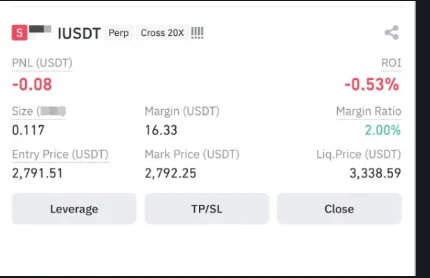
This is a sample position card in Binance's public guide to the Futures app Detailed Mode, captured from the help page on 10 October 2026. Its prices and 2.00% ratio are example screen values, not live values for your position.
What does the margin ratio measure?
Binance's Futures liquidation explanation states the relationship as margin ratio = maintenance margin / margin balance. Displayed as a percentage, it compares the collateral required to keep the exposure open with the balance available to support it. Binance says reaching 100% triggers liquidation. Its risk guide notes that some or all positions may be liquidated; “100%” is a trigger, not a prediction of how much will be closed or what balance will remain.
The two amounts can both change. Binance calculates maintenance margin from the position's notional value and its current leverage-and-margin bracket, including a maintenance amount adjustment. A larger position can require more maintenance margin; the exact bracket depends on the contract and can change. Check the live leverage and margin parameters for your symbol, or see how Binance leverage tiers work for the terms used in the table. Do not use a fixed maintenance percentage copied from another contract.
Margin balance changes with collateral and unrealized profit or loss. Binance's Futures wallet guide explains that unrealized PnL is calculated with Mark Price and affects margin balance. Funding or trading fees can also reduce the relevant balance. For example, a hypothetical maintenance requirement of 40 USDT divided by a 200 USDT margin balance gives a 20% ratio; if the balance falls to 80 USDT while that requirement stays at 40 USDT, the ratio becomes 50%. These numbers only show the arithmetic. In an actual position, the maintenance requirement may move too.
Why can it rise when the last traded price looks unchanged?
Binance uses Mark Price, rather than the latest transaction price, for unrealized PnL and liquidation calculations. Those two prices can differ. Its liquidation protocol describes the distinction. A rising ratio can also reflect a larger notional position or a changed maintenance bracket, a lower supporting balance, or a funding payment. For a perpetual position, how Binance funding payments work explains when a payment may be taken from margin.
Use this order to check a change: confirm the symbol and Mark Price, compare the remaining position size with the current bracket, then inspect recent funding, fees and balance transfers. A chart's Last Price alone cannot explain every change in the ratio.
Cross and Isolated: which balance backs the position?
| Mode | Balance to examine | Risk to keep in view |
|---|---|---|
| Cross | The shared Futures wallet balance and the effect of other cross positions | Losses or gains elsewhere can change the support available to this position. More of the shared wallet is exposed. |
| Isolated | Margin allocated to the particular position | Other positions do not automatically supply that position's margin. Adding margin increases the amount committed to it. |
Binance's Cross versus Isolated explanation describes this separation. A Cross position is not necessarily safer because it shows a lower ratio at one moment; another position can change the shared balance. Isolated margin limits the collateral assigned to a position, but it does not prevent that position from being liquidated. The ratio on one card should be read with its margin mode and the rest of the account in mind.
Where should you check the live figure?
In the Binance Futures app, open Positions for the exact contract and check its mode, position size, Margin Ratio, Mark Price and estimated Liq. Price together. Binance's public Detailed Mode guide shows these fields in the sample card above. If your app is in Brief Mode, that guide describes the Positions Display Mode setting; labels and placement may change, so use the current screen for your account. The sample screenshot cannot tell you your own risk.
The margin ratio summarizes the balance-versus-requirement relationship now. The liquidation price is an estimate of the Mark Price level at which the risk engine may act, based on current inputs. It can move as balances, funding or position size change. Read how Binance liquidation price is calculated when comparing that price with the ratio; they answer different questions about the same position.
If the ratio is climbing, check whether an intended closing order has filled, rather than treating a submitted order as an exit. Reducing exposure can lower the maintenance requirement; adding margin can increase the supporting balance, but also puts more capital at risk. Neither action guarantees that a fast-moving position will avoid liquidation. Binance's liquidation protocol says its risk engine may close part or all of a position once the threshold is reached, so confirm the current position and account record after any action.
Scope: standard Binance Futures margin-ratio terminology. Spot Margin borrowing and Portfolio Margin have different risk displays and rules. This article explains how to read a field; it is not a live risk calculation or a trading recommendation. Check the current contract rules and your own Futures screen.